What a Complete Enterprise Hybrid AI Architecture Actually Looks Like
We’ll build it layer by layer, assembling an architecture to coordinate automation across all infrastructure types using a hybrid mix of deterministic and agentic (probabilistic) orchestration.
This article introduces a five-layer reference architecture that powers a complete Enterprise Hybrid AI Architecture. It accounts for established and emerging technologies that will be included in the automation and orchestration of agents and deterministic automation.
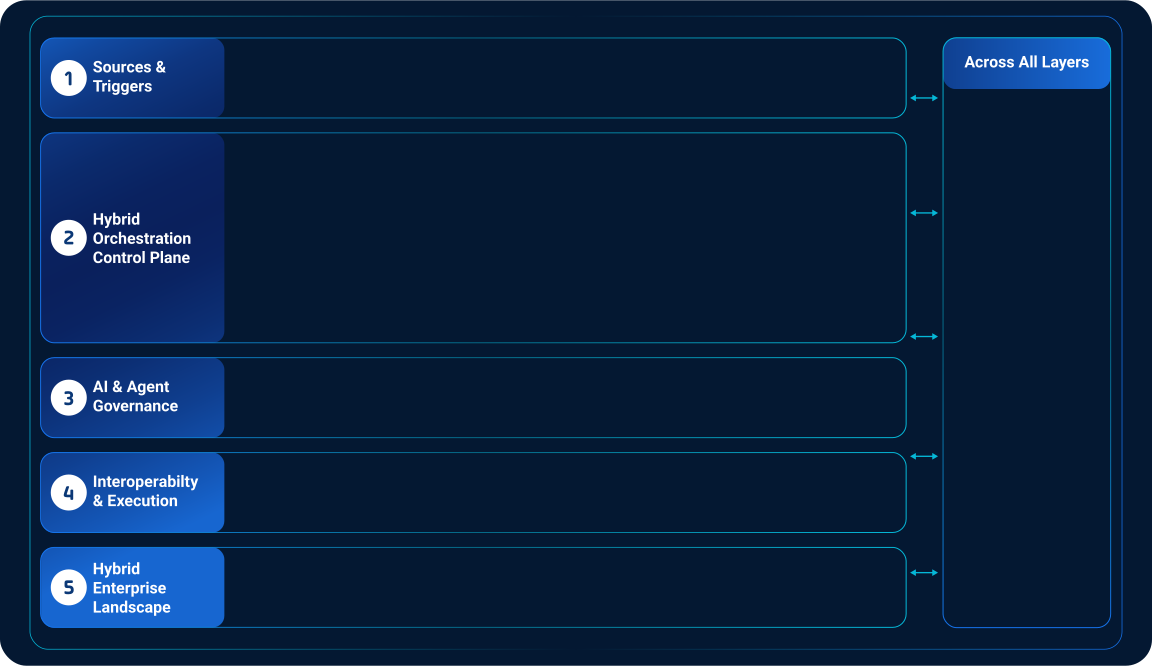
Enterprise AI doesn’t run in a single platform or layer. A complete architecture has to coordinate how work starts, how it is orchestrated, how AI is governed and executed alongside deterministic automation, and how actions reach the systems where the business actually operates.
The easiest way to understand it is as five functional layers, supported by controls that span vertically across them. I’m going to refer to this as the Enterprise Hybrid AI Architecture.
One caveat about the diagram before we start. A layered picture can imply that every AI request travels the same path: down through orchestration, into the agent platform, through the gateway, out to a model, and back. Enterprise work does not move that way. The layers describe responsibilities, not a mandatory route.
Layer One: Sources and Triggers
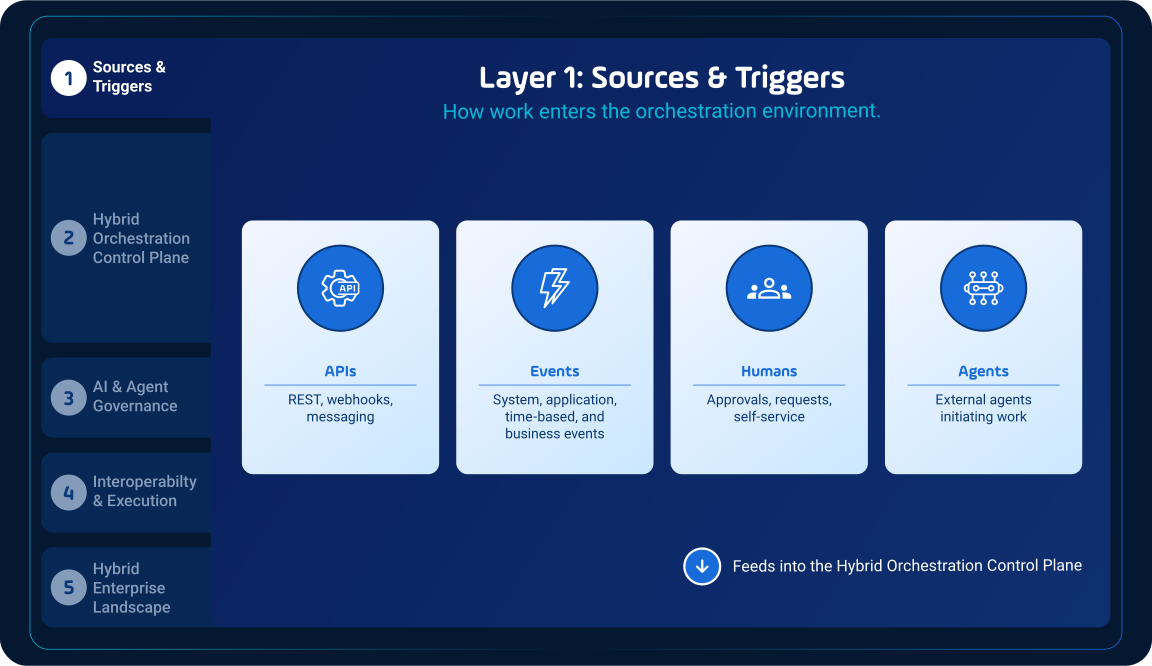
Every process starts somewhere.
Work may be initiated by a person, an application or business event, an API or webhook, a schedule, or another AI agent.
The big change in the agentic era, and one of the catalysts for creating this architecture, is that agents can trigger and run automation.
Key Function: This layer establishes what started the work, who initiated it, and what business process it belongs to.
Layer Two: Hybrid Orchestration Control Plane
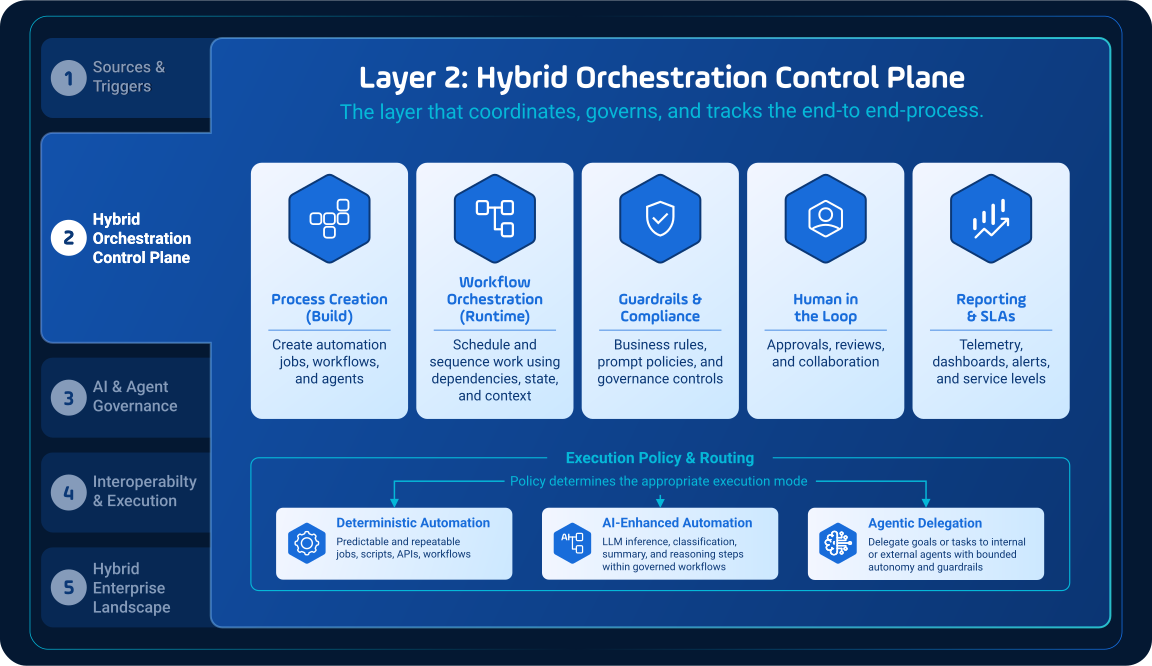
The Hybrid Orchestration Control Plane manages the end-to-end business process.
It coordinates workflows, dependencies, state, human approvals, policies, exceptions, retries, and recovery. Most importantly, it determines how each step should execute.
That execution may take one of three forms:
- Deterministic automation handles predictable work such as jobs, scripts, APIs, workflows, and runbooks.
- AI-assisted automation uses models for bounded tasks such as classification, extraction, summarization, or reasoning inside an otherwise controlled deterministic workflow.
- Agentic delegation gives an AI agent a bounded objective and allows it to determine how to complete the task within defined policies and permissions.
The orchestration layer coordinates all three within the same end-to-end process and maintains the authoritative state of that process.
The word hybrid is an important addition to the more traditional enterprise control plane name because enterprise processes may combine deterministic automation, direct AI inference, and agentic delegation. AI is one execution pattern—not the center of the architecture.
Key Function: Needed to coordinate the end-to-end process, maintain state, and decide when work should be deterministic, AI-assisted, or agentic.
Side Quest: Explanation of Agent Orchestration vs. the Hybrid Orchestration Control Plane
This is where many people get hung up, because many software vendors use the word “orchestration” to describe their offering. However, the technologies that claim to orchestrate differ markedly in what they actually orchestrate.
For example, an agent runtime within an agentic orchestration tool may be excellent at automating work within an agentic task. But enterprise processes are much bigger than a single agentic task.
A business process may combine agentic work with deterministic automation, direct model calls, human approvals, data pipelines, enterprise applications, and infrastructure operations. Something still has to coordinate that entire process from beginning to end.
That is the distinction between agent orchestration and the Hybrid Orchestration Control Plane:
- Agent orchestration manages the reasoning, tools, and actions inside an agentic task.
- The Hybrid Orchestration Control Plane coordinates the larger end-to-end process across agentic, AI-assisted, deterministic, and human-driven work.
Several software categories are competing to become the default hybrid orchestration control plane, including business process automation (BPA), robotic process automation (RPA), agent orchestration platforms, and open-source AI orchestration tools.
One category is particularly well positioned for this role because enterprise-wide orchestration is already its core function: service orchestration and automation platforms (SOAP).
Gartner describes SOAP platforms as combining workload automation, workflow orchestration, and data pipeline orchestration across complex on-premises and cloud-native environments. In other words, these platforms already coordinate the kinds of cross-system processes that increasingly need to include AI and agents.
This maps directly to the inner-loop and outer-loop model discussed earlier in this series:
- Inner loop: the agent runtime coordinates the work required to complete an agentic task.
- Outer loop: the Hybrid Orchestration Control Plane coordinates that task as part of the broader enterprise process.
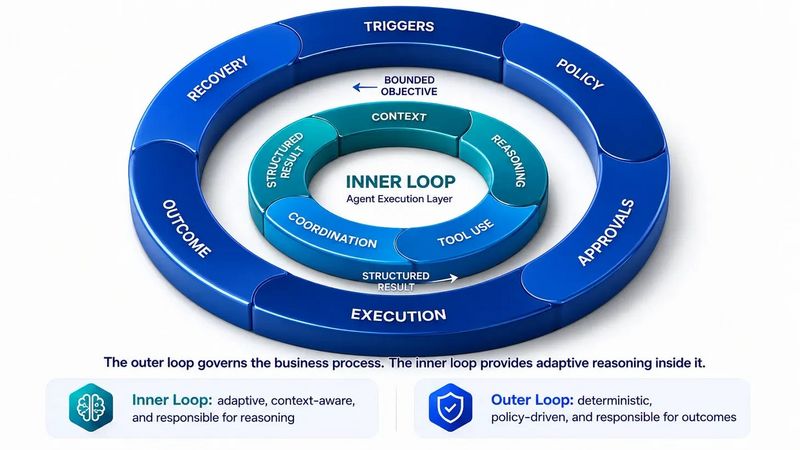
The Hybrid Orchestration Control Plane, therefore, maintains the authoritative view of the end-to-end process state: what started the process, what has completed, what is still running, which systems have changed, which approvals were granted, and what should happen next.
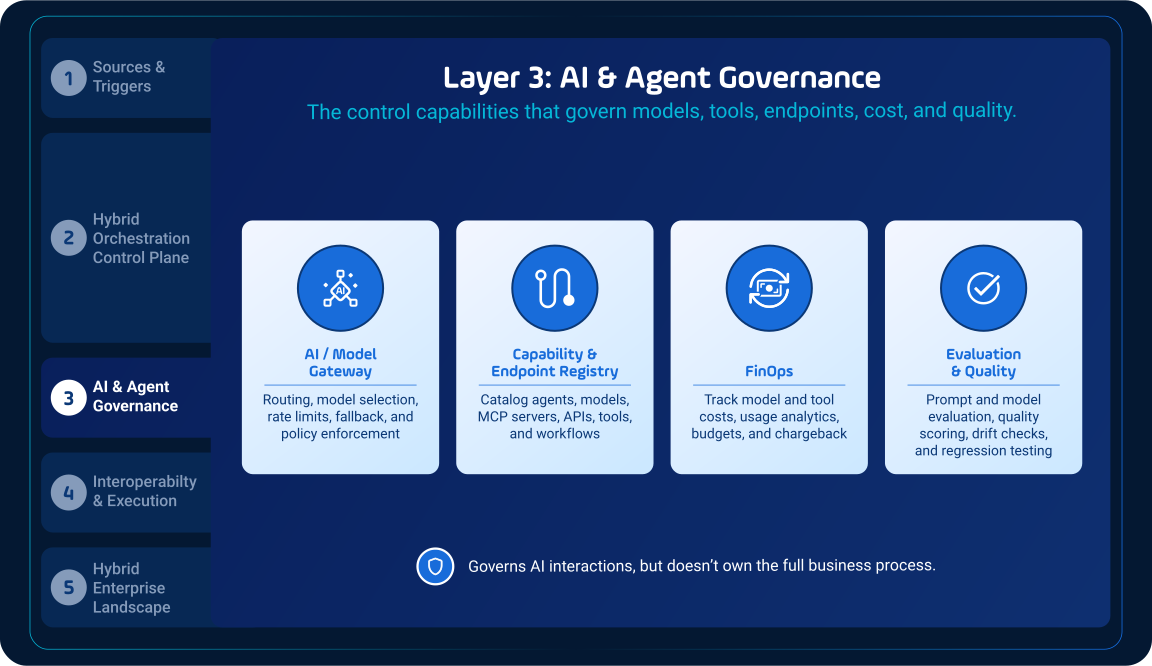
Layer Three: AI and Agent Governance Services
This layer governs the AI-specific components used by the process.
- AI/model gateways control access to models, including provider routing, model selection, rate limits, fallback, caching, and request-level policy enforcement.
- Capability and endpoint registries catalog approved agents, models, MCP servers, APIs, tools, and enterprise workflows so they can be discovered, versioned, and governed.
- FinOps services track AI usage, cost, budgets, and chargeback. Gateways can enforce request-level spending limits, while broader FinOps platforms provide financial governance across models, agents, tools, and infrastructure.
- Evaluation and quality services test models, prompts, and agents for quality, drift, regressions, and unexpected behavioral changes.
Together, these services determine what AI capabilities exist, who can use them, under what policies, and at what cost.
This layer governs the AI resources available to the enterprise. It does not own the end-to-end business process in which those resources are used.
Key Function: Needed to control which models, agents, tools, and AI capabilities are approved, accessible, and operating within policy.
Layer Four: Interoperability and Execution
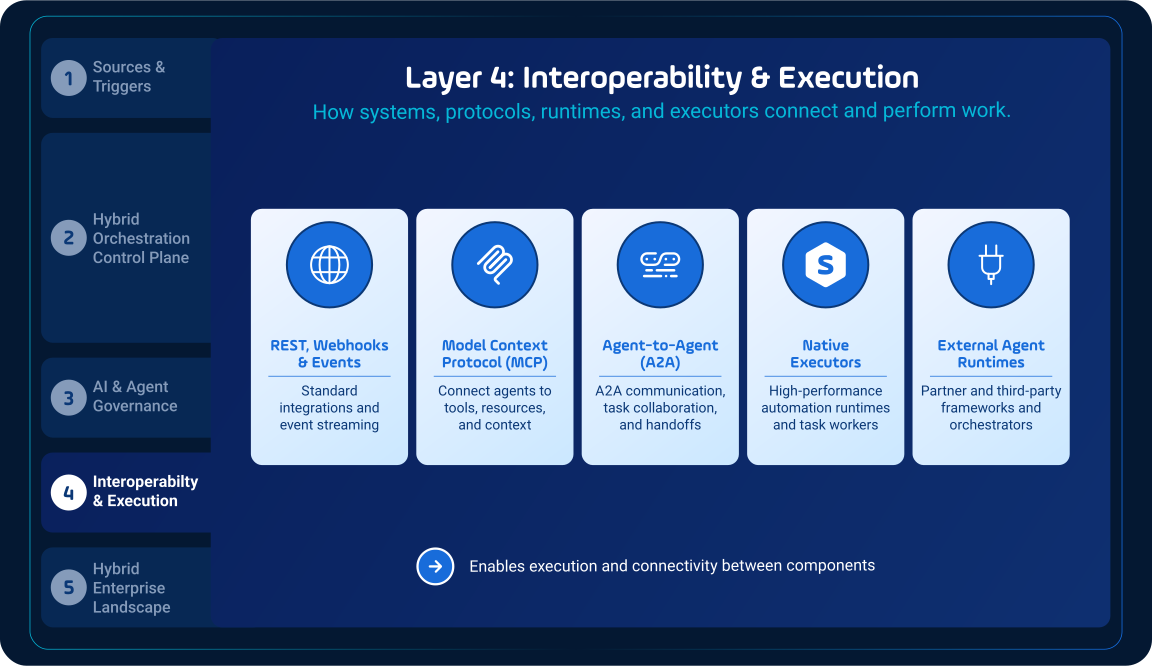
This is where systems, tools, agents, and workflows connect and execute.
Traditional APIs, REST interfaces, webhooks, and events connect applications and services.
- MCP provides a standardized way for agents to access tools, resources, and context.
- A2A supports communication and delegation between agents.
Agent runtimes (in agent orchestration tools) and native automation executors (within your enterprise applications) are the components that actually perform the work once the orchestration layer has determined how a step should run.
- Agent runtimes provide the execution environment for agentic tasks, allowing agents to reason, maintain local working or session state, invoke tools, and coordinate with other agents.
- Native agentic executors in enterprise applications are designed to perform autonomous tasks within their applications. Additionally, these application-specific agents may connect to and trigger jobs, scripts, commands, file transfers, API calls, and infrastructure tasks within the Hybrid Orchestration Control Plane layer.
Together, these provide complementary execution paths: agent runtimes for adaptive, reasoning-driven work and the ability to trigger or be triggered by native executors as a tool call.
What is Interoperability? It is the ability of different digital components to communicate, exchange data, and work together autonomously through standardized protocols, without requiring complex, custom-built integrations.
Interoperability defines how components connect, discover capabilities, exchange work, and execute across different platforms and protocols. But interoperability does not define business authority. A protocol may make a tool or agent accessible without determining whether it should be used, by whom, or under what conditions.
This is why one of the strongest enterprise patterns is to expose approved workflows as tools rather than granting agents broad access to underlying systems. The agent can request an action, while the governed workflow enforces the policies, approvals, dependencies, and controls required to execute it safely.
Key Function: Needed to connect agents, tools, workflows, and systems so they can discover capabilities, communicate, and execute work across platforms—without confusing technical access with business authorization.
Layer Five: Hybrid Enterprise Landscape
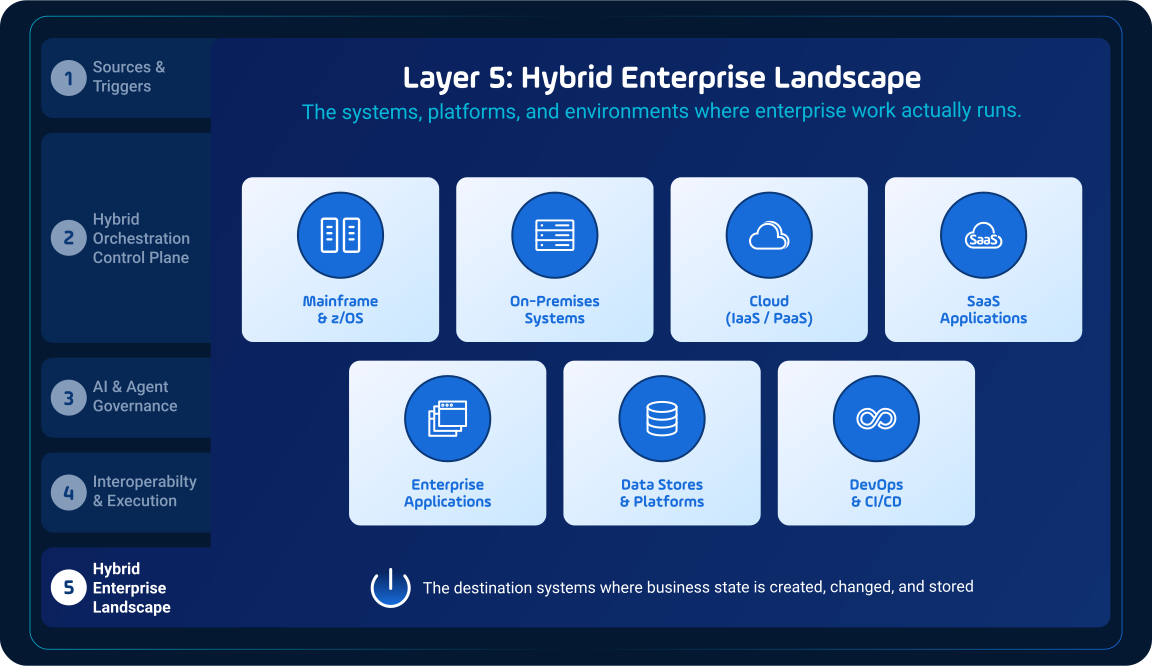
Ultimately, automation and AI have to act on real enterprise systems.
That includes mainframes, on-premises infrastructure, public cloud, SaaS applications, enterprise applications, data platforms, file systems, and CI/CD and DevOps environments.
These environments have their own credentials, dependencies, maintenance windows, policies, and failure conditions. A complete Enterprise Hybrid AI Architecture must therefore coordinate AI and automation across the hybrid enterprise rather than treating AI as an isolated technology stack.
Key Function: Needed because AI ultimately has to interact with the real applications, data, infrastructure, and systems where enterprise work happens.
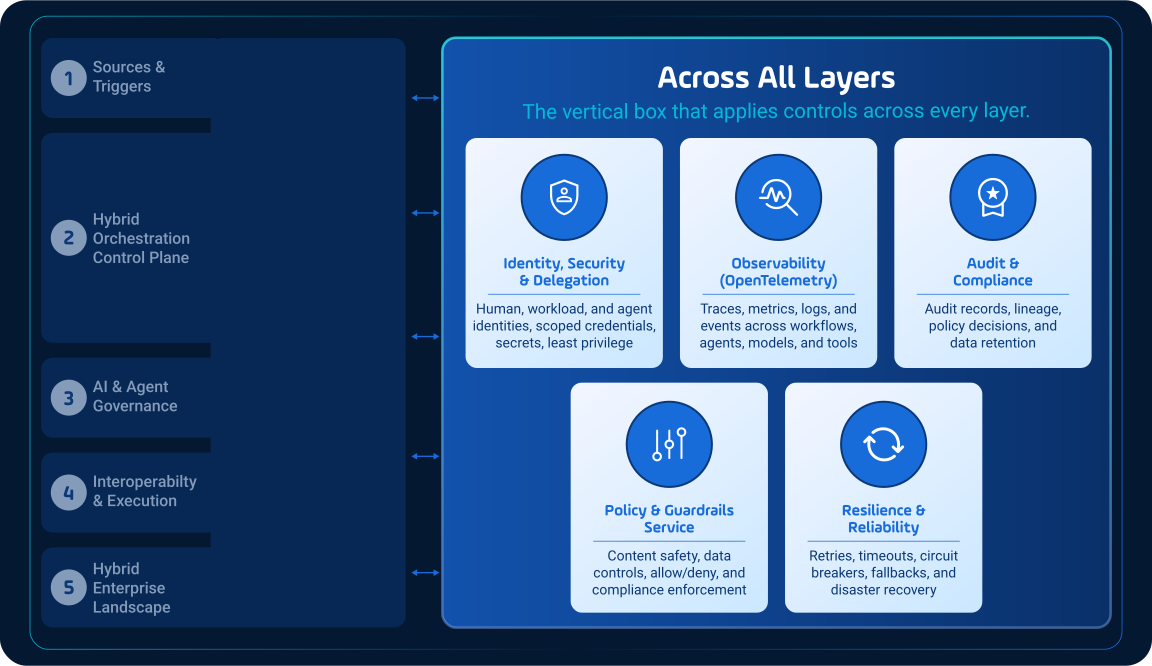
Vertical Box That Controls Every Layer
Several requirements cannot belong to a single layer because they must follow the work from beginning to end.
- Identity, security, and delegation preserve who or what is acting, on whose behalf, and with what permissions.
- Observability connects logs, traces, metrics, agent activity, model calls, tool execution, and workflow state.
- Audit and compliance preserve the evidence needed to reconstruct what happened, which policies were applied, and who authorized the actions.
- Policy and guardrail services define which models, agents, data, tools, and actions are allowed.
- Resilience and reliability provide timeouts, retries, fallbacks, recovery, and other mechanisms required to operate AI-driven processes in production.
These controls are not owned exclusively by any single layer. Rather, many of them are integrated into the process via the Hybrid Orchestration Control Plane. The important point is that they must survive the boundaries between layers.
The tools that provide the information in this vertical layer run the gamut of software categories. They include categories like IAM, PAM, secrets management, API security, mesh security, APM, telemetry (metrics, traces, logs), GRC applications, access controls, HA failover, and policy engines.
Key Function: Needed to ensure identity, security, observability, compliance, cost control, and resilience are applied and followed across every layer.
The Complete Picture
Finally, we get to the complete view of the Enterprise Hybrid AI Architecture. If you’re still here, congratulations! You get to see the full architecture - in all its glory.
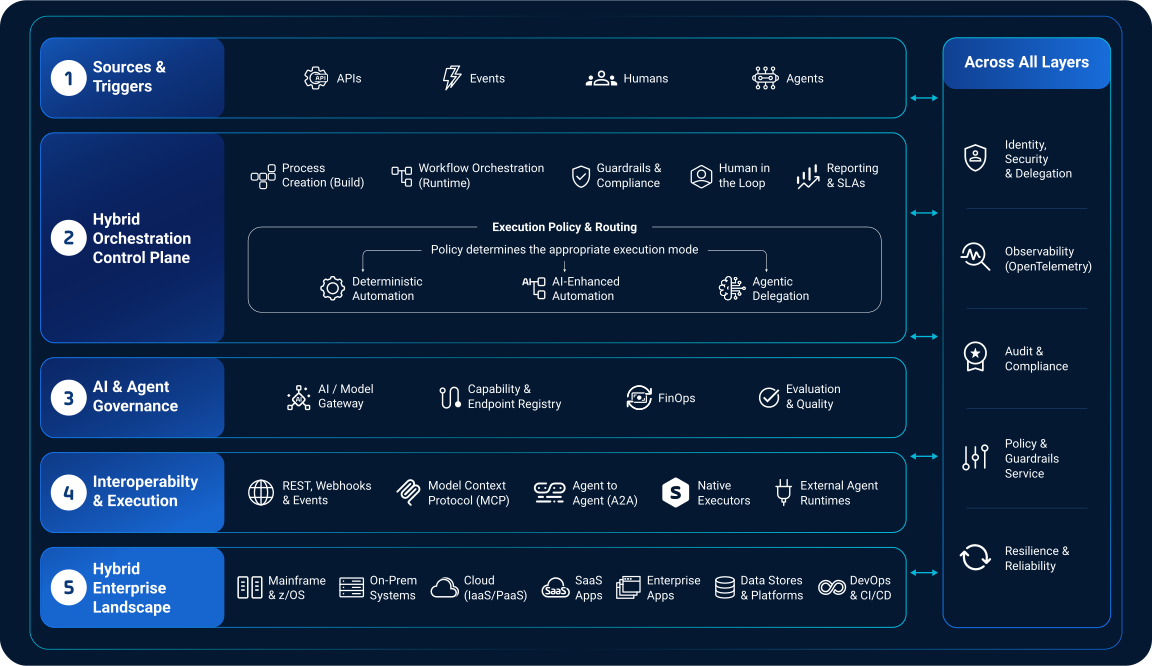
No single component, by itself, is the Enterprise Hybrid AI Architecture.
AI gateways govern model access. Agent platforms execute agentic work. Interoperability standards connect components. Enterprise systems perform the underlying work.
The Hybrid Orchestration Control Plane connects these capabilities into end-to-end business processes while the cross-cutting controls make those processes secure, observable, accountable, and reliable.
That’s the architecture: one governed process, multiple ways to execute.
Author

Scott Davis
Chief Marketing Officer
Scott Davis is Chief Marketing Officer at Stonebranch, where he leads global brand, product marketing, demand generation, and corporate communications. He brings 20+ years of B2B SaaS marketing experience, with prior senior leadership roles at SAP and Calero Software.